

A cleaner arrives at your door, ready to work, and you realize you never asked one key question: do cleaners bring supplies? For most professional cleaning services, the answer is yes. A prepared team typically arrives with the products and tools needed to clean standard surfaces efficiently. Still, the exact answer depends on the service, the property, and any special requests you have.
Knowing what is included before your appointment prevents delays, avoids misunderstandings, and helps your cleaning team deliver the best possible result.
Do Cleaners Bring Supplies for a Standard Cleaning?
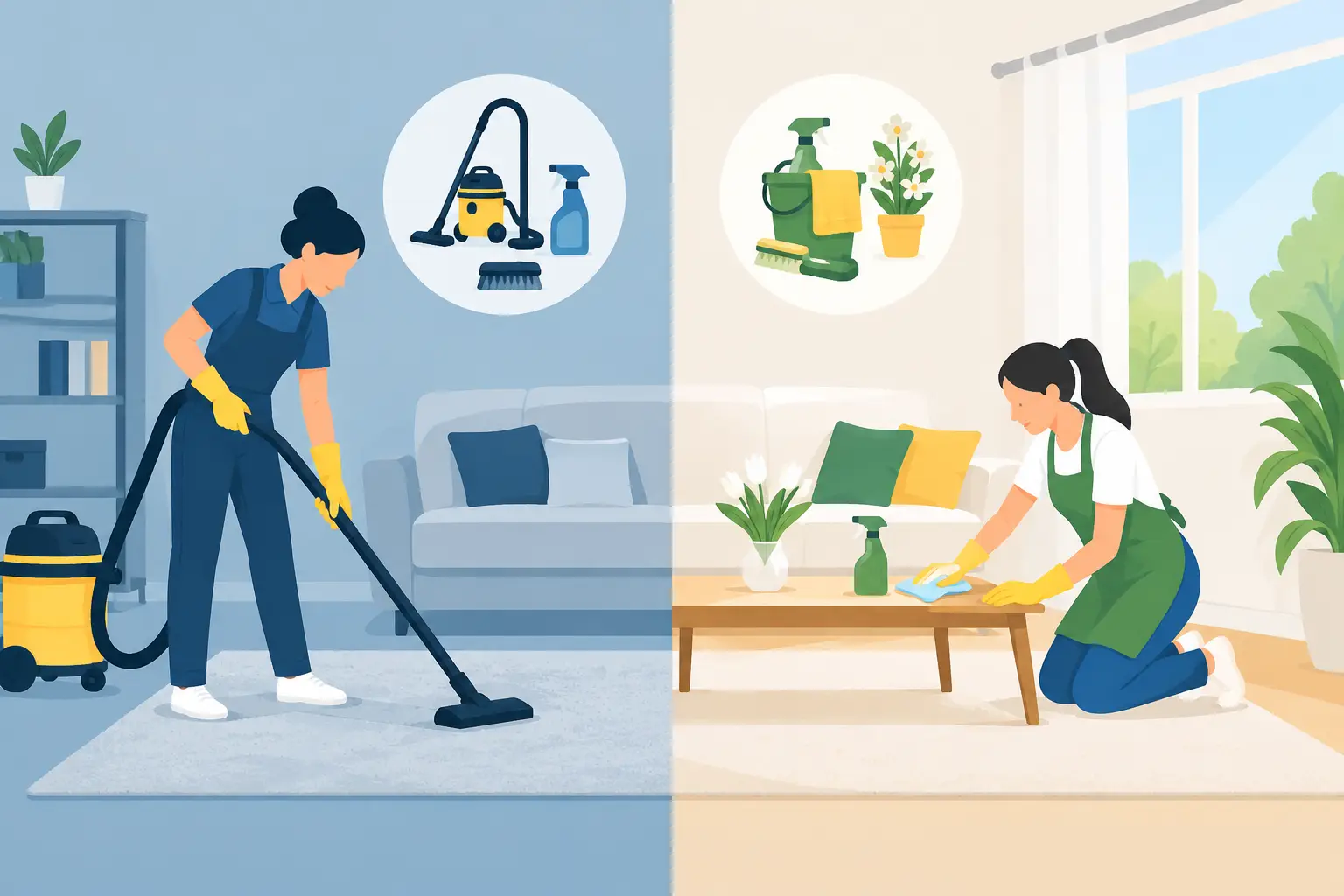
Professional cleaners generally bring the everyday supplies required for a standard home or office cleaning. That usually includes surface cleaners, disinfectants, glass cleaner, bathroom cleaner, microfiber cloths, sponges, mops, and a vacuum or other floor-cleaning equipment.
These supplies are selected to handle common cleaning tasks: wiping kitchen counters, sanitizing bathrooms, dusting furniture, vacuuming floors, mopping hard surfaces, and removing fingerprints from mirrors and glass. A professional team should not need to borrow your paper towels, dish soap, or old vacuum to complete a routine visit.
That said, service providers may handle equipment differently. Some teams bring all major equipment on every visit, while others may ask clients to provide a vacuum or mop for recurring cleanings, especially in large homes or buildings with specific flooring needs. Ask before booking rather than assuming.
At Roenter Clean, clear expectations are part of a stress-free cleaning experience. Confirming the scope and supply needs in advance helps the team arrive prepared and keeps your appointment on schedule.
What Professional Cleaning Supplies Usually Include
Most standard cleaning supplies are designed for routine, visible results. They are not necessarily intended for every specialty job or every delicate surface.
For a typical residential or commercial appointment, cleaners commonly bring products and tools for dusting, bathroom sanitation, kitchen cleaning, glass cleaning, floor care, and general disinfecting. They may also bring detail tools for baseboards, corners, fixtures, blinds, and other areas that collect dust and buildup.
A well-equipped cleaner uses separate cloths and tools for different areas. Bathroom materials should not be used on kitchen surfaces, for example. This kind of process matters because a space can look clean while still being cleaned carelessly. Professional cleaning is not just about moving quickly. It is about using the right tools in the right areas.
For window cleaning, post-construction cleanup, deep cleaning, or move-in and move-out work, the supply list may expand. Those services often require specialized scrapers, extension tools, heavy-duty degreasers, dust-control materials, or equipment for construction debris.
When You May Need to Provide Supplies
There are situations where the client should provide a product or at least communicate a preference before the visit. This is especially true when someone in the home has allergies, sensitivities, pets, young children, or a strong preference for fragrance-free or eco-conscious products.
If you want a specific cleaner used on your granite, marble, hardwood, stainless steel, or other high-value surface, have it available and point it out when the team arrives. The same applies if you have a preferred floor product, a particular disinfectant for your business, or a specialty cleaner approved by the manufacturer.
You may also need to provide supplies if your property requires a unique product. For example, a rental host may request a specific laundry detergent for linens, or an office may require approved products for a medical-adjacent workplace. A cleaner cannot reasonably be expected to carry every brand, scent, or specialty formula available.
Be direct about these needs during the quote or booking process. A simple note such as, “Please use only fragrance-free products in the bedrooms,” gives the cleaning team the information they need to plan properly.
Cleaners Bring Supplies, but Access Still Matters
Having supplies is only one part of a successful appointment. Cleaners also need reasonable access to the areas included in your service.
Before the team arrives, clear personal items from bathroom counters, kitchen counters, desks, and floors where possible. This does not mean you need to clean before the cleaners come. It simply means putting away fragile items, important papers, valuables, and clutter that would slow down the work or make cleaning surfaces difficult.
For homes, secure pets if they are nervous around new people or likely to get underfoot. For offices, let employees know when the cleaning team is scheduled and make sure locked rooms can be accessed if they are part of the requested service. For short-term rentals, confirm the previous guests have fully checked out and that keys, gate codes, and parking instructions are ready.
Water and electricity should also be available. A cleaning team may need outlets for vacuums and access to water for mopping or rinsing tools. These details are simple, but they can make the difference between a smooth appointment and an incomplete one.
Specialty Services May Require Different Equipment
Standard cleaning is not the same as deep cleaning, post-construction cleaning, or a turnover service for a vacation rental. Each job has different demands, so the products and equipment may change.
A deep cleaning often focuses on buildup in kitchens and bathrooms, neglected baseboards, detailed dusting, and hard-to-reach surfaces. A post-construction clean may involve fine dust, adhesive residue, paint splatter, and debris that require more intensive tools and extra time. An Airbnb turnover may require linen handling, restocking coordination, guest-ready bathroom presentation, and close attention to hair, fingerprints, and high-touch areas.
Commercial properties can also have unique requirements. A small office may need routine desk-area cleaning and restroom service, while a retail space may need spotless glass, clean entryways, and floors that maintain a professional appearance throughout the day.
The best approach is to describe the actual condition of the property when requesting a quote. Mention renovations, pets, heavy grease, accumulated dust, rental turnover deadlines, or any areas that have not been cleaned recently. Accurate information allows the cleaning company to bring appropriate supplies, schedule enough time, and assign the right crew.
Questions to Ask Before You Book
You do not need a long checklist to get clarity. Ask whether supplies and equipment are included, whether the team can accommodate product preferences, and whether your service has any special supply requirements.
It is also useful to ask what is not included. Some cleaning services do not include exterior windows, inside ovens, inside refrigerators, laundry, dishes, heavy organization, or hazardous waste removal unless these tasks are specifically added. Clear service boundaries protect both the client and the cleaning team.
If you manage a property in Palm Beach County, ask about scheduling and turnaround times as well. For rental hosts, offices, and contractors, reliable timing can matter as much as the cleaning itself. A fully supplied team is helpful, but dependable communication and a final quality check are what make the service easier to rely on.
How to Get the Best Result From Your Cleaning Visit
The most effective cleaning appointments start with honest expectations. Tell the company what you want cleaned, identify priority rooms, and mention anything that needs special care. If your goal is a guest-ready rental, a polished office, or a detailed reset after a renovation, say so clearly.
You should also communicate if there are surfaces the team should avoid or products they should use. Professional cleaners can bring the supplies, but they cannot guess your preferences or know every detail about your property without your input.
A good cleaning service should make this process straightforward. You should know what the team is bringing, what the appointment covers, and what you can do before arrival to help the work go smoothly. That clarity leaves you with what you hired cleaners for in the first place: a spotless space and one less task on your schedule.