

A kitchen can look clean and still have residue, moisture, and germs left behind on the places people touch most. Understanding how cleaners sanitize kitchen surfaces helps homeowners, office managers, and rental hosts see why a quick wipe is not always enough. Professional results come from using the right product, following the correct order, and giving sanitizers enough time to work.
For busy Palm Beach County homes, workplaces, and short-term rentals, kitchen sanitation is about more than appearance. It helps keep food-prep areas ready for use, reduces cross-contamination risks, and creates a cleaner experience for family members, employees, and guests.
Cleaning Comes Before Sanitizing
Cleaning and sanitizing are related, but they are not the same task. Cleaning removes visible soil, crumbs, grease, spills, and residue. Sanitizing reduces germs on a properly cleaned surface to a safer level. If a counter is still greasy or covered in food particles, a sanitizer may not reach the surface evenly or perform as intended.
This is why experienced cleaners do not simply spray every surface with one product and move on. They first remove clutter, food debris, and surface grime. Counters, stovetops, sinks, appliance handles, and tables are cleaned with an appropriate cleaner or detergent. After that, the surface is ready for a sanitizer or disinfectant that matches the material and the task.
The distinction matters most in kitchens because food and hands move constantly between surfaces. A cutting board, refrigerator handle, faucet lever, cabinet pull, and countertop can all become transfer points during a normal day. A methodical process prevents cleaners from spreading mess from one area to another.
How Cleaners Sanitize Kitchen Surfaces Step by Step
Professional kitchen sanitation follows a consistent sequence. The exact products may change based on the surface material, the type of property, and whether the area is used for food preparation, but the process stays focused on safety and coverage.
1. Start With High-Touch and Food-Prep Areas
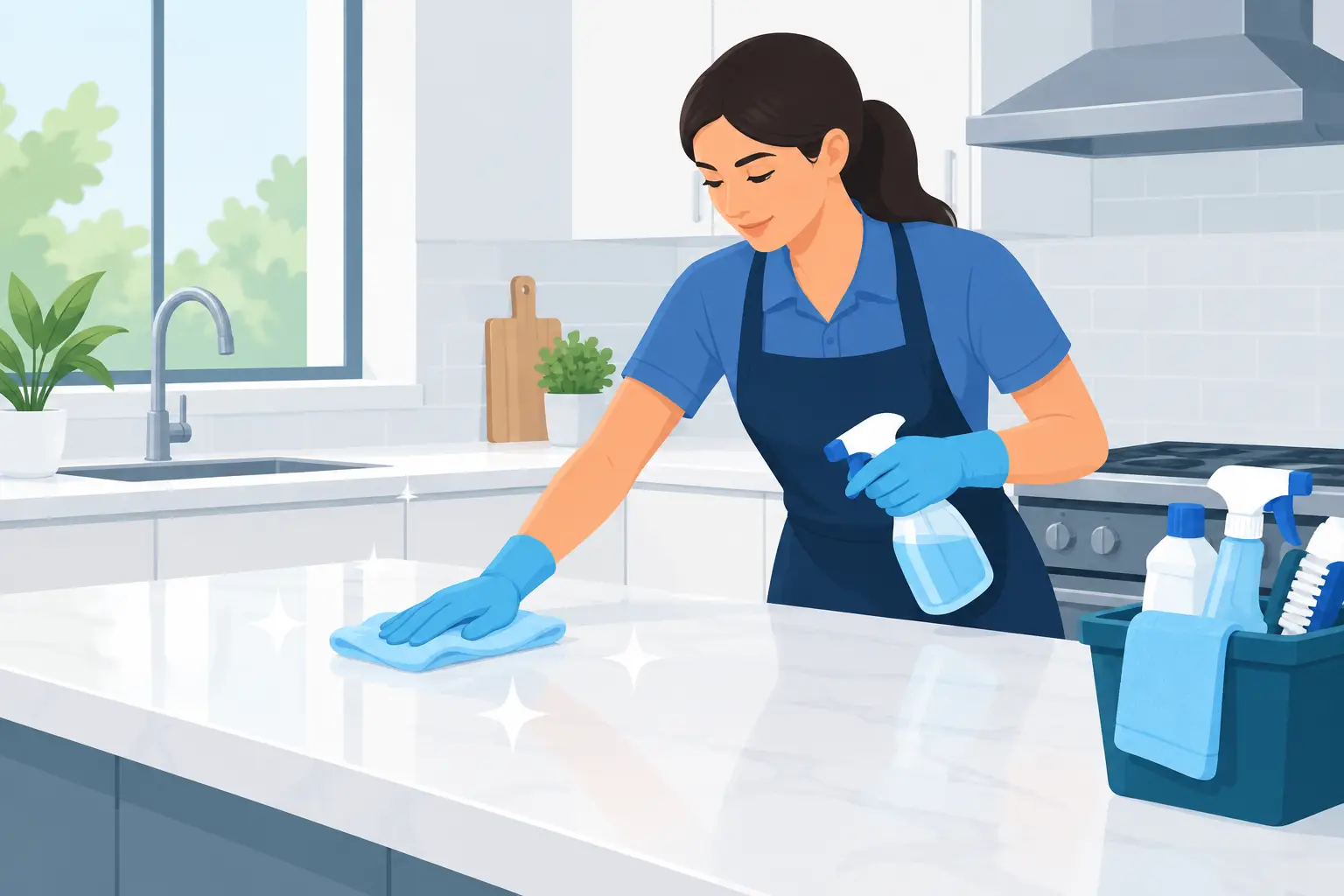
Cleaners begin by identifying the areas that need the most attention. These commonly include countertops, sink basins, faucet handles, cabinet hardware, refrigerator and microwave handles, stovetop controls, tables, and trash can lids. In a rental turnover or office break room, shared coffee stations and appliance buttons also deserve close attention.
Starting with these zones creates a practical priority list. Even when time is limited, the most frequently touched areas receive detailed cleaning and sanitation rather than a rushed pass.
2. Remove Debris and Degrease the Surface
Food particles and grease create a barrier between the surface and the sanitizer. A cleaner may use a microfiber cloth, nonabrasive scrub pad, or kitchen-safe degreaser to lift buildup without damaging the finish. Crumbs are removed from seams and corners, and sticky spills are loosened before the surface is treated.
Microfiber is often a smart choice because it traps soil effectively and can be changed between areas. Using a fresh cloth for the counter after cleaning the sink helps prevent cross-contamination. The same principle applies to sponges and scrub pads. A tool that has cleaned a dirty drain area should not be used on a food-prep counter.
3. Use the Right Product for the Job
Not every kitchen surface can handle the same cleaner. Stainless steel, sealed quartz, laminate, glass, natural stone, painted cabinetry, and wood each have different care requirements. Harsh products may dull a finish, leave streaks, weaken sealants, or cause permanent damage.
For example, acidic cleaners can be a poor fit for natural stone, while abrasive powders can scratch glossy cooktops and stainless steel. A professional cleaner checks the product label and selects a kitchen-appropriate option. When a sanitizer or disinfectant is used, it should be approved for the surface and used exactly as directed by its manufacturer.
Food-contact surfaces require extra care. If a product label calls for rinsing after treatment, the surface should be rinsed with clean water before it is used for preparing food. This is especially relevant for countertops, cutting boards, and tables.
4. Respect Contact Time
One of the most commonly missed parts of sanitation is contact time. Spraying a product and immediately wiping it away may remove some dirt, but it may not allow the product to meet its sanitation or disinfection claim.
Contact time is the amount of time a surface must remain visibly wet for the product to work as intended. It varies by product, so cleaners follow the label instead of relying on guesswork. The surface should stay wet for the required time, then be wiped or rinsed if the directions call for it.
This step is simple, but it separates a fast surface wipe from a thorough sanitation process. In a commercial kitchen break room, an Airbnb between guests, or a family kitchen after raw-food prep, those extra minutes can make a meaningful difference.
5. Finish Dry, Streak-Free, and Ready to Use
Once the required contact time has passed, cleaners complete the job according to the product instructions. That may mean wiping the surface dry, rinsing a food-contact area, or buffing stainless steel to remove streaks. The finishing step matters because leftover product residue can attract soil, affect the appearance of the surface, or leave a kitchen feeling unfinished.
A final visual check catches missed crumbs, water spots around faucets, fingerprints on appliances, and residue along counter edges. Detail finishing is what makes a kitchen feel genuinely cared for rather than quickly cleaned.
Sanitizing vs. Disinfecting in a Kitchen
The words are often used interchangeably, but sanitizing and disinfecting can serve different purposes. Sanitizing reduces bacteria on surfaces to levels considered safer under the product’s instructions. Disinfecting is designed to kill or inactivate a broader range of germs identified on the label.
For routine kitchen upkeep, sanitation of high-touch and food-prep areas is often the practical focus after proper cleaning. Disinfection may be appropriate after illness, a contamination concern, or in settings with heavier shared use. It depends on the product label, the surface, and the situation.
More chemical is not always better. Using the strongest product available on every surface can damage materials and create unnecessary residue. The dependable approach is to match the product and process to the need.
Kitchen Surfaces That Need Special Attention
Some areas collect more soil and hand contact than others. Sink drains and faucet bases can trap moisture and residue. Refrigerator handles are touched repeatedly while cooking. Cabinet pulls pick up oils from hands, while microwave buttons, oven handles, and light switches are easy to overlook.
Counter seams, backsplash edges, and the narrow spaces around small appliances also deserve attention. These areas collect crumbs and splatter that a casual wipe may miss. In a rental property, cleaners should also check inside the microwave, the refrigerator shelves and handles, and the trash area because guests notice these details quickly.
Cutting boards need careful treatment. Plastic boards with deep grooves may hold residue and should be replaced when they become heavily worn. Wood boards require gentler care and should not be soaked or treated with products that are not suitable for wood. For any board used with raw meat, thorough cleaning followed by the correct sanitation procedure is essential.
Safety Practices Professionals Follow
Kitchen cleaning products should never be mixed. Combining bleach with ammonia, acids, or other cleaners can create dangerous fumes. Products should also be stored securely and kept away from food, children, and pets.
Ventilation matters when using stronger cleaning or disinfecting products. Opening a window, running an exhaust fan, or allowing fresh air into the room can make the process more comfortable and safer. Gloves may be appropriate for certain products or for heavy degreasing work, especially when a cleaner has sensitive skin.
Professionals also avoid transferring contamination through their equipment. Clean cloths are rotated frequently, mop water is changed when dirty, and tools used in bathrooms are kept separate from kitchen tools. These operational details are not flashy, but they are central to consistent results.
How Often Should Kitchen Surfaces Be Sanitized?
High-touch areas benefit from frequent attention, especially in homes with children, shared offices, active rentals, or busy food preparation. Countertops should be cleaned after meal prep and spills. Sanitizing is especially useful after handling raw meat, eggs, seafood, or unwashed produce.
For office kitchens and common break rooms, daily cleaning of counters, sink fixtures, appliance handles, and tables helps maintain a professional space. Airbnb and short-term rental kitchens need a full reset between guests, including sanitation of touchpoints and food-prep areas.
A recurring professional cleaning plan can keep the kitchen under control, while deep cleaning addresses grease buildup, overlooked edges, cabinet fronts, and appliance exteriors. Roenter Clean uses a detail-focused process so kitchens are not only visibly clean, but also properly cared for where it counts.
A well-sanitized kitchen does not need to smell heavily of chemicals or look overly polished to be effective. It needs clean surfaces, the correct products, enough contact time, and a final check that leaves the room ready for the next meal, workday, or guest arrival.