

The first thing a client notices when entering your office is rarely your mission statement or latest project. It is the front desk, the floors, the restroom, the break room, and the condition of the surfaces employees touch all day. Strong office hygiene helps protect your professional image while making the workplace more comfortable for the people who keep your business moving.
For office managers and business owners, the challenge is consistency. A space can look tidy after a quick straighten-up but still have overflowing trash, smudged glass, dusty vents, or high-touch surfaces that have not been properly cleaned. A practical hygiene plan closes that gap without creating more work for your team.
What Good Office Hygiene Actually Covers
Office hygiene is more than disinfecting desks when someone calls out sick. It combines regular cleaning, proper waste handling, restroom care, surface sanitation, and simple habits that prevent messes from building up. The right level of service depends on the size of your office, daily foot traffic, the type of work performed, and whether clients visit regularly.
A small professional office with a handful of employees may only need detailed cleaning once or twice a week, plus light daily upkeep. A busy medical-adjacent office, retail back office, shared workspace, or customer-facing business may need cleaning every day. In either case, the goal is the same: keep the space visibly clean, sanitary, and ready for work.
A complete plan should address the areas that affect health, appearance, and daily operations. That includes entryways, reception counters, workstations, conference rooms, kitchens, restrooms, floors, interior glass, and trash receptacles. Ignoring just one of these areas can make an otherwise clean office feel neglected.
Prioritize High-Touch Surfaces
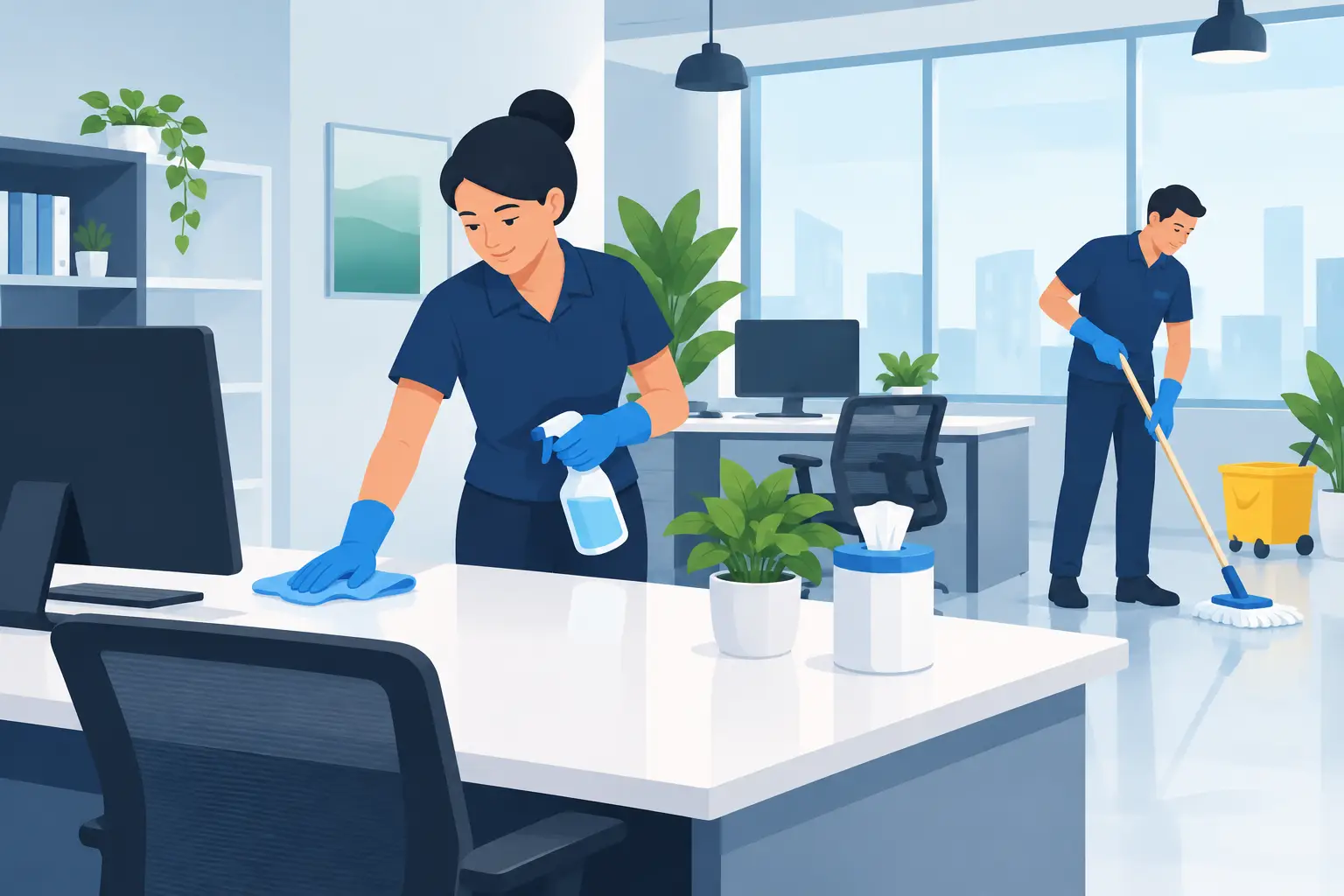
Door handles, elevator buttons, light switches, shared printers, appliance handles, faucet levers, conference tables, and reception counters collect frequent hand contact. These surfaces should receive routine attention, especially during cold and flu season or when employees share equipment.
Cleaning and disinfecting are related, but they are not the same task. Cleaning removes visible dirt, oils, crumbs, and residue. Disinfecting is intended to reduce germs on an already cleaned surface. Skipping the first step can leave residue behind and reduce the effectiveness of the disinfectant.
Use products appropriate for the surface and follow label directions, including contact time. Spraying a surface and immediately wiping it dry may not deliver the intended result. Electronics need extra care as well. Screens, keyboards, and phones should be cleaned with materials suited to those items, not saturated with liquid.
Employees can help with personal desks and equipment, but shared spaces need clear ownership. If everyone assumes someone else will sanitize the copier keypad or clean the coffee station, it often does not get done.
Restrooms Set the Standard
A restroom is one of the clearest signs of how a business handles cleanliness. Customers, vendors, and employees notice empty soap dispensers, stained fixtures, unpleasant odors, and neglected floors right away. These problems are not only uncomfortable. They can also cause people to question the condition of the rest of the operation.
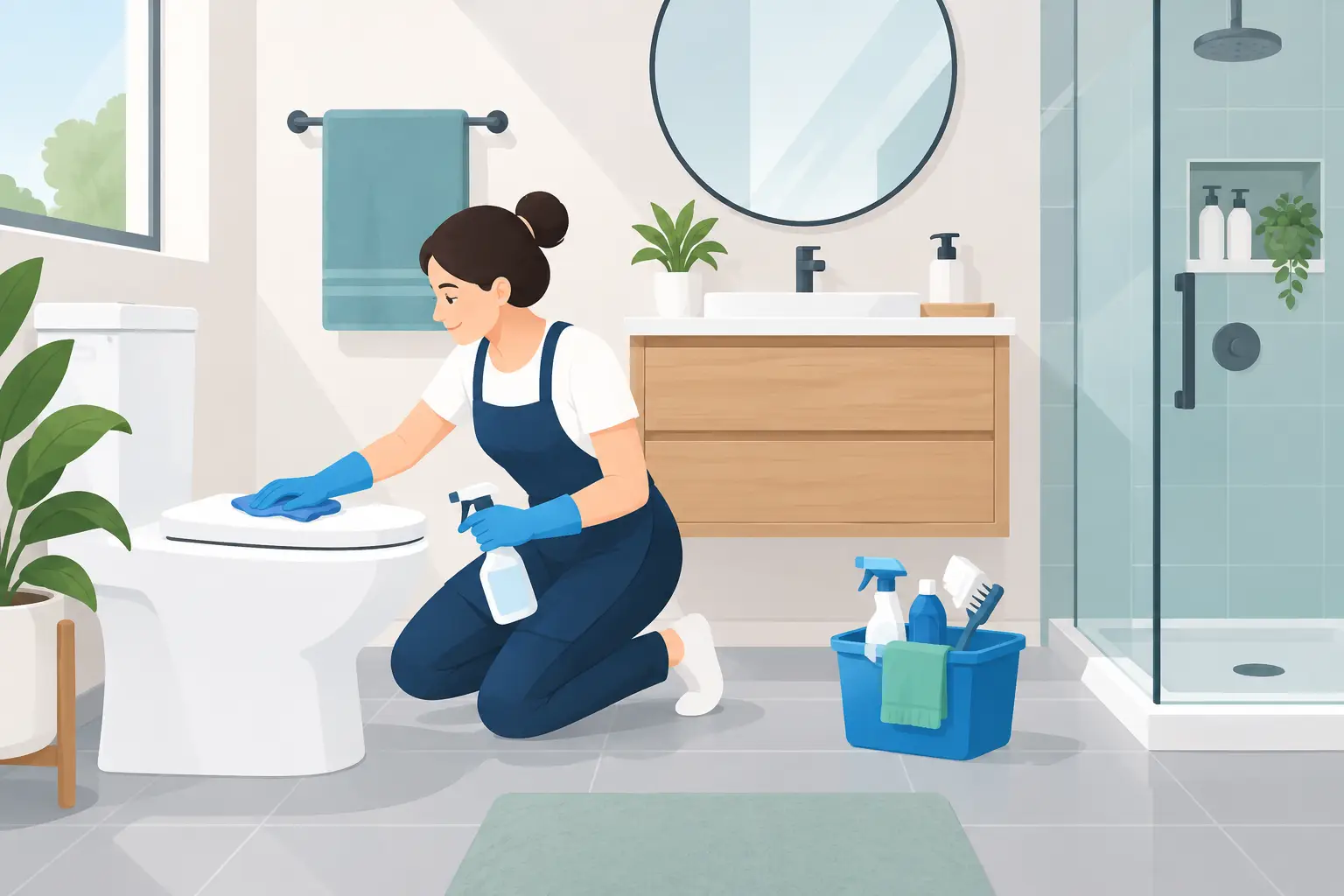
Restrooms should be checked often enough to keep soap, paper products, and hand sanitizer stocked. Toilets, sinks, counters, handles, and partitions need routine cleaning and disinfection. Floors deserve the same attention, particularly around toilets and sinks where moisture and residue can create odors or slip risks.
Frequency matters here. A low-traffic office may be fine with a daily cleaning and supply check. A busy workplace with visitors may need multiple checks throughout the day. The right schedule is based on actual use, not what is easiest to place on a calendar.
Keep Break Rooms From Becoming a Problem
The break room is where office hygiene usually breaks down first. Food crumbs, sticky counters, used dishes, microwave spills, and an overfilled refrigerator can turn a small shared space into a daily frustration. It can also attract pests if waste and food residue are left behind.
A clear routine works better than reminders alone. Countertops, tables, sink areas, appliance handles, and the microwave should be cleaned on a dependable schedule. Trash and recycling should be emptied before odors develop. Refrigerator cleanouts should happen regularly, with a firm policy for unlabeled or expired food.
There is a balance to strike. Employees should clean up after themselves, but a business should not rely entirely on individual habits to maintain a sanitary common area. Scheduled professional cleaning provides the consistent reset that busy teams often cannot manage during the workday.
Floors, Glass, and Dust Affect the Whole Impression
Floors carry in sand, moisture, pollen, and debris every day. In Palm Beach County, rain, landscaping debris, and frequent foot traffic can quickly make entrances and walkways look worn. Regular vacuuming or sweeping helps, but periodic mopping and detailed floor care are necessary to remove grime that basic maintenance misses.
Entry glass and interior glass deserve attention as well. Fingerprints around doors, smudged conference room windows, and streaked glass partitions make a workplace feel less polished. Streak-free cleaning is a small detail with a large visual payoff, especially in offices where customers arrive for appointments.
Dust is another quiet problem. It settles on blinds, vents, baseboards, shelves, light fixtures, and the tops of cabinets where it may not be immediately visible. Over time, it can contribute to stale odors and make the office look poorly maintained. Routine detail cleaning prevents that gradual buildup.
Build a Schedule That Matches Your Office
The best office hygiene schedule is not necessarily the most frequent one. It is the one that matches the way your space is used and can be completed reliably. Start by separating daily tasks from weekly and periodic work.
Daily upkeep usually includes emptying trash, cleaning restrooms, wiping high-touch surfaces, tidying common areas, and addressing spills. Weekly work may include vacuuming upholstered furniture, mopping hard floors, dusting more thoroughly, cleaning break room appliances, and polishing glass. Monthly or periodic tasks can include deep-cleaning baseboards, vents, blinds, interior cabinets, and other overlooked areas.
If your team handles light daily upkeep, document exactly what is expected and where supplies are stored. A vague instruction to “keep the office clean” leads to uneven results. A simple schedule creates accountability and makes it easier to spot when professional support is needed.
Know When to Bring in Professional Cleaning
In-house upkeep can handle small messes, but it has limits. When employees are spending valuable work time managing restrooms, vacuuming common areas, or cleaning after meetings, it can affect productivity. It also creates inconsistent results when those tasks are rushed or passed from person to person.
Professional office cleaning is especially helpful for businesses with regular client traffic, multiple restrooms, large common areas, or recurring sanitation needs. It also makes sense after events, renovations, seasonal spikes in activity, or illness-related concerns. A reliable cleaning team can work around office hours and follow a tailored checklist so important details are not missed.
Roenter Clean provides recurring and one-time office cleaning for businesses that need a dependable, detail-focused standard without adding another task to their internal team.
Make Hygiene Easy for Employees to Maintain
A professional cleaning service is most effective when employees have the tools to handle quick issues between visits. Keep hand soap, paper towels, disinfecting wipes, trash liners, and basic spill-cleanup supplies accessible. Place clear bins where people naturally need them, especially near break rooms, printers, and entrances.
It also helps to set reasonable expectations. Encourage employees to clear dishes, dispose of food, report spills, and keep personal workspaces manageable. Avoid turning staff into janitors. The purpose is to prevent avoidable messes, not shift the full cleaning burden onto employees.
Office hygiene is a daily signal of how your business operates. When the restrooms are stocked, glass is clear, floors are clean, and shared spaces are ready to use, people feel the difference. A consistent plan gives your team a cleaner place to work and gives every visitor one less reason to doubt the care behind your business.