

A bathroom can look clean and still need attention where it matters most: faucet handles, flush levers, toilet seats, sink drains, light switches, and the floor around the toilet. This bathroom sanitation guide helps homeowners, renters, office managers, and rental hosts build a practical routine that keeps these high-use spaces fresh, presentable, and easier to maintain.
The goal is not to use the strongest product on every surface every day. It is to remove soil first, target germs where people touch shared fixtures, control moisture, and keep small problems from turning into stains, odors, or guest complaints.
Bathroom Sanitation Guide: Clean First, Then Disinfect
Cleaning and disinfecting are related, but they are not the same job. Cleaning removes visible dirt, soap scum, body oils, hair, and residue. Disinfecting uses an appropriate product to kill or inactivate many germs on a hard, nonporous surface. Sanitizing generally reduces the number of bacteria to a safer level.
For most homes, regular cleaning plus focused disinfection of high-touch areas is a sensible approach. In shared offices, vacation rentals between guests, and bathrooms used by someone who is ill, disinfection should be more deliberate. Product directions matter. A disinfectant must stay visibly wet for the label-listed contact time to work as intended. Spraying and immediately wiping it dry may leave you with a nice scent but not the result you expected.
Start by clearing counters, removing towels, and taking out trash. Apply a bathroom-safe cleaner to the sink, counter, shower, tub, and toilet exterior. Let it sit long enough to loosen buildup, then wipe or scrub. Once the surface is free of grime, disinfect frequently touched hard surfaces with a product approved for that use.
Never mix cleaning chemicals. Bleach and ammonia, acidic toilet bowl cleaners, vinegar, and some other products can create hazardous fumes when combined. Use ventilation, follow each label, and keep products away from children and pets.
Focus on the Surfaces People Actually Touch
The sink area often needs more attention than it gets. Toothpaste spots and water marks are easy to see, but faucet handles, the lever or button, cabinet pulls, and the edge of the counter receive repeated hand contact. Wipe these areas during routine cleaning and disinfect them after illness or before guests arrive.
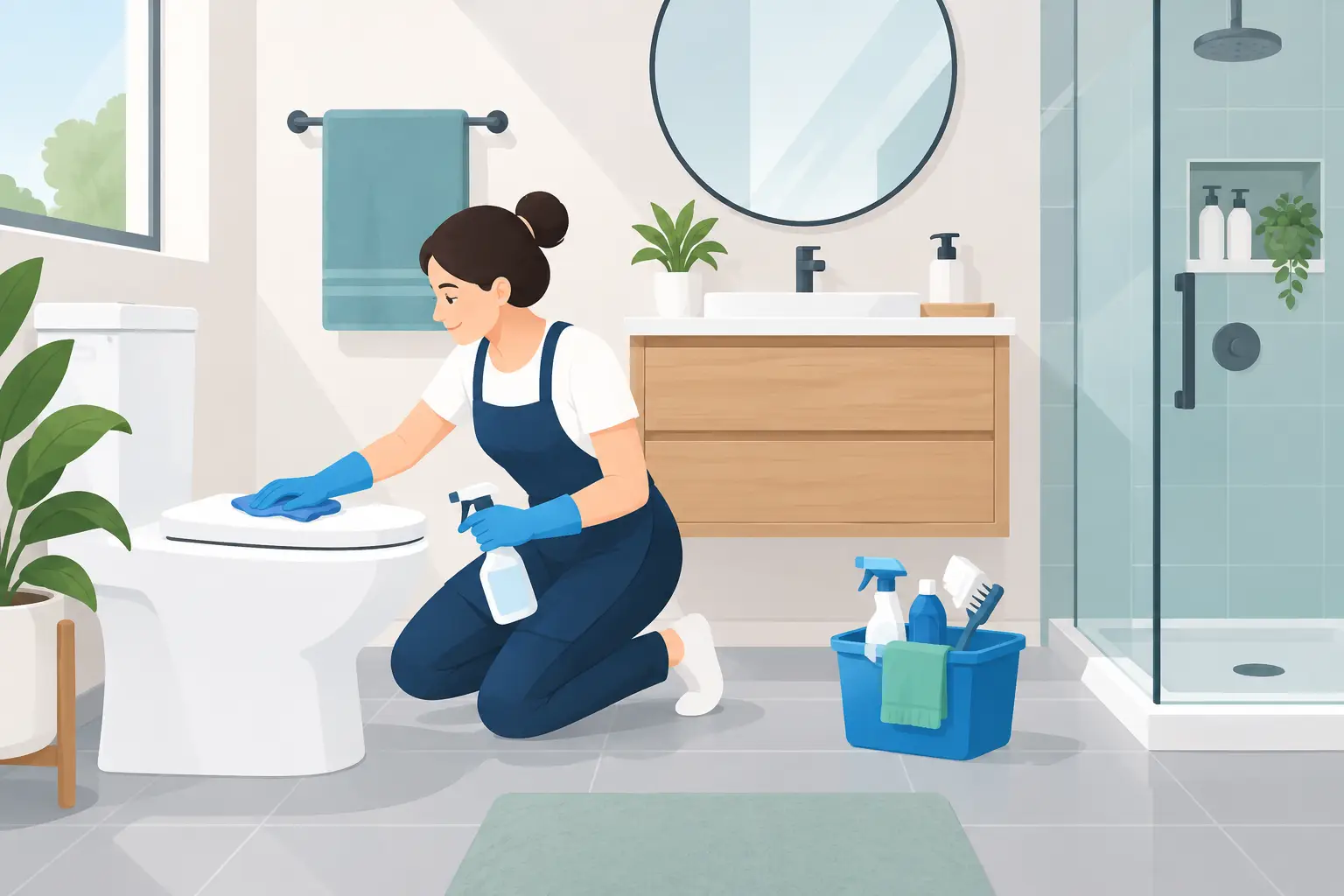
The toilet requires a methodical approach. Clean the bowl with a dedicated toilet brush and cleaner, including beneath the rim where mineral buildup can collect. Then wipe the lid, seat, hinge area, flush handle, tank top, and exterior base. Work from cleaner areas to dirtier areas so you do not transfer residue from the toilet to the sink or other fixtures. Use disposable paper towels or separate washable cloths reserved for the toilet area.
Do not overlook the bathroom door handle, lock, light switch, fan switch, and wastebasket lid. In an office restroom or short-term rental, these are some of the most consistently touched surfaces. They take only a few extra minutes, yet they make a noticeable difference in overall sanitation.
Give the Floor and Toilet Base Special Attention
A clean vanity can distract from a neglected floor. Hair, dust, moisture, and toilet-area residue collect around the base of the toilet, behind doors, and along baseboards. Vacuum or sweep first, then mop with a cleaner suitable for the flooring. A separate mop pad or cloth for the bathroom is a good practice, especially when cleaning multiple rooms.
For tile grout, use a non-abrasive cleaner and brush as needed. Avoid aggressive scrubbing on natural stone, which can etch or dull under acidic cleaners. When in doubt, check the surface manufacturer’s care instructions rather than assuming one product is safe for every bathroom material.
Control Moisture Before It Becomes Mold or Odor
Palm Beach County humidity can make bathrooms slow to dry, especially in homes with limited ventilation or rentals that sit closed between stays. Moisture control is a core part of sanitation because damp surfaces support mildew growth and produce the musty smell guests and residents notice immediately.
Run the exhaust fan during showers and for at least 20 minutes afterward. If there is no fan, open a window when weather and privacy allow, and keep the bathroom door open after use to improve airflow. Hang wet towels fully open, empty bath mats regularly, and squeegee shower walls when possible. These small habits reduce the need for heavy scrubbing later.
Check under the sink, around the toilet base, and near shower doors for slow leaks. A recurring damp spot, peeling caulk, soft drywall, or persistent mildew may point to a maintenance issue rather than a cleaning issue. Cleaning can improve the appearance, but it cannot solve an active leak.
Shower curtains and liners also deserve routine care. Replace liners that are heavily stained or torn. Wash fabric curtains according to their care label, and wipe down liners regularly to prevent soap residue and mildew from building up at the bottom.
Build a Schedule That Fits the Bathroom’s Use
A bathroom used by one person needs a different schedule than an office restroom, a family bathroom, or an Airbnb turnover. Frequency should follow traffic, not guesswork. The more people using the room, the faster high-touch surfaces, floors, and trash need attention.
For a typical household, wipe the sink and counter several times a week, clean the toilet weekly, and clean the shower or tub weekly or as buildup appears. Disinfect high-touch points more often during cold, flu, or stomach-bug season. Replace hand towels every day or two, and replace them immediately if they are visibly soiled.
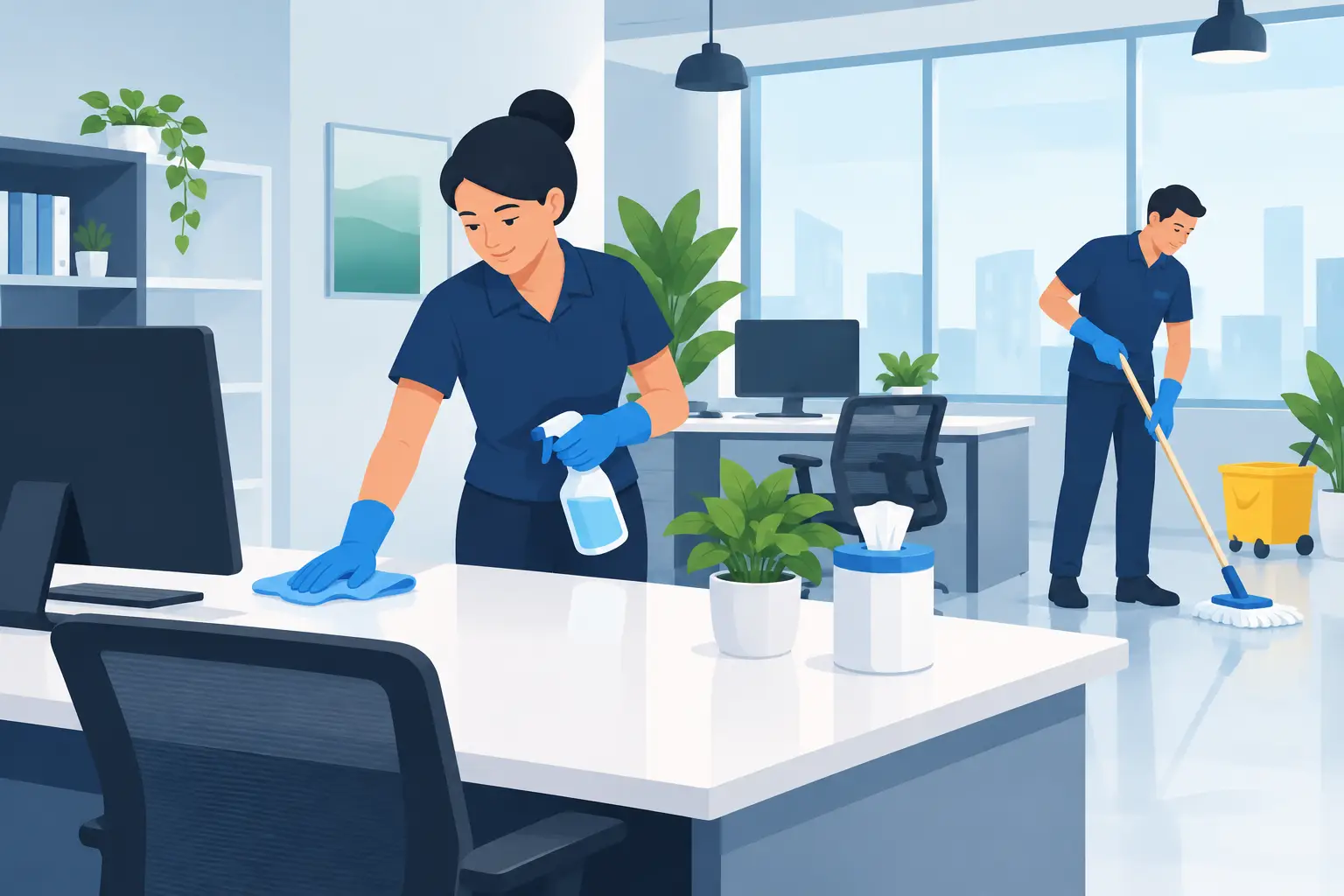
For offices and shared commercial spaces, daily restroom attention is usually the practical standard. Refill soap, paper products, and hand sanitizer if provided. Empty trash, disinfect touchpoints, clean fixtures, and check floors for moisture or debris. A restroom that runs out of soap or towels sends the wrong message, even if the room was cleaned that morning.
For short-term rentals, complete sanitation between guests is non-negotiable. Launder all towels, remove used toiletries and trash, disinfect touchpoints, clean the toilet thoroughly, and inspect for hair, smudges, and water marks before the final walkthrough. A spotless bathroom is one of the clearest signals that a property is guest-ready.
Use Tools That Prevent Cross-Contamination
The right tools make cleaning faster, but how you use them matters just as much. Color-coded microfiber cloths can help separate sink and counter work from toilet work. Wash reusable cloths after use on a hot cycle when the fabric allows, and let them dry completely. Do not reuse a cloth from the toilet on another surface.
Keep a dedicated toilet brush, and store it so it can dry instead of sitting in pooled liquid. Replace worn sponges and scrubbers often. Sponges can hold odor and bacteria when they remain damp, so washable cloths or disposable towels are often the better choice for sanitation tasks.
Product choice depends on the surface and the job. A daily shower spray may help reduce soap scum, while a disinfectant is better for high-touch fixtures. Glass cleaner can improve mirrors and shower doors, but it does not replace a cleaner that removes soap residue. Using the wrong product may waste time or damage finishes.
When Professional Bathroom Cleaning Makes Sense
Sometimes routine upkeep is enough. Other times, a bathroom needs more time and detail than a busy household, office team, or property manager can give it. Deep cleaning is useful when soap scum has hardened, grout is dingy, odors keep returning, dust has collected on vents and baseboards, or a move-out, renovation, or guest turnover has created a tight deadline.
Professional cleaning also helps create consistency across multiple bathrooms. For property managers and rental hosts, that consistency protects reviews and reduces the risk of an overlooked fixture. For homeowners, it can reset the room so routine maintenance becomes much easier. Roenter Clean provides detailed residential, office, deep-cleaning, and rental cleaning support throughout Palm Beach County when a bathroom needs more than a quick wipe-down.
A sanitary bathroom should feel simple to use: soap available, surfaces dry, fixtures clean, trash contained, and no odor competing for attention. Set a realistic schedule, address moisture early, and give high-touch areas the focused care they deserve. Those habits keep the room ready for family, staff, or the next guest without last-minute stress.