

Last Updated: November 21, 2026
Quick Summary
To clean fine construction dust, wet it, trap it, and remove it instead of pushing it around. Mist the floor lightly with water, vacuum slowly with a HEPA shop vacuum, then mop with warm water and a drop of dish soap. Never dry sweep, because that spreads construction dust back into the air.
- Mist the floor with water first to hold dust down before vacuuming.
- Vacuum slowly with a HEPA shop vacuum so the filter catches fine particles.
- Work from the far corner toward the door to keep cleaned area behind you.
- Wipe walls and furniture top down with a damp microfiber cloth, not a duster.
- Change the HVAC filter after cleanup, not before, since dust hides in vents.
Table of Contents
- How to Clean Construction Dust from Floors
- How to Clean Construction Dust from Furniture and Walls Post Construction
- When Post Construction Cleaning Needs a Professional Team
- Frequently Asked Questions
How to Clean Construction Dust from Floors
Fine construction dust is the powdery residue left after sanding, drywall work, and cutting. It settles everywhere and lifts back into the air the moment you sweep. Dry sweeping spreads fine dust fastest. The rule for how to clean fine construction dust is simple: wet it, trap it, remove it. Never push it around.
Here is the order that works:
- Mist the floor lightly with water to hold dust down.
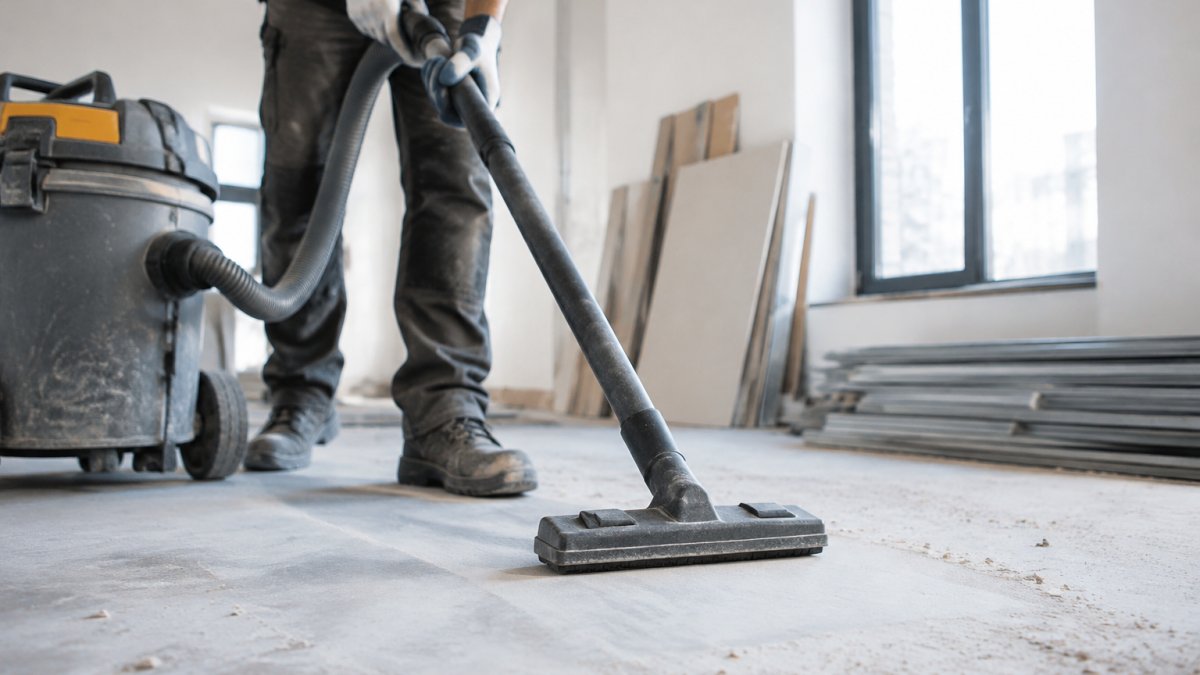
- Vacuum first with a HEPA shop vacuum, going slow so the filter catches fine particles.
- Work from the far corner toward the door.
- Sweep only if needed with a damp broom, never a dry one.
- Mop with warm water and a drop of dish soap, rinsing often.
- Repeat the mop pass once dry to lift the haze most people miss.
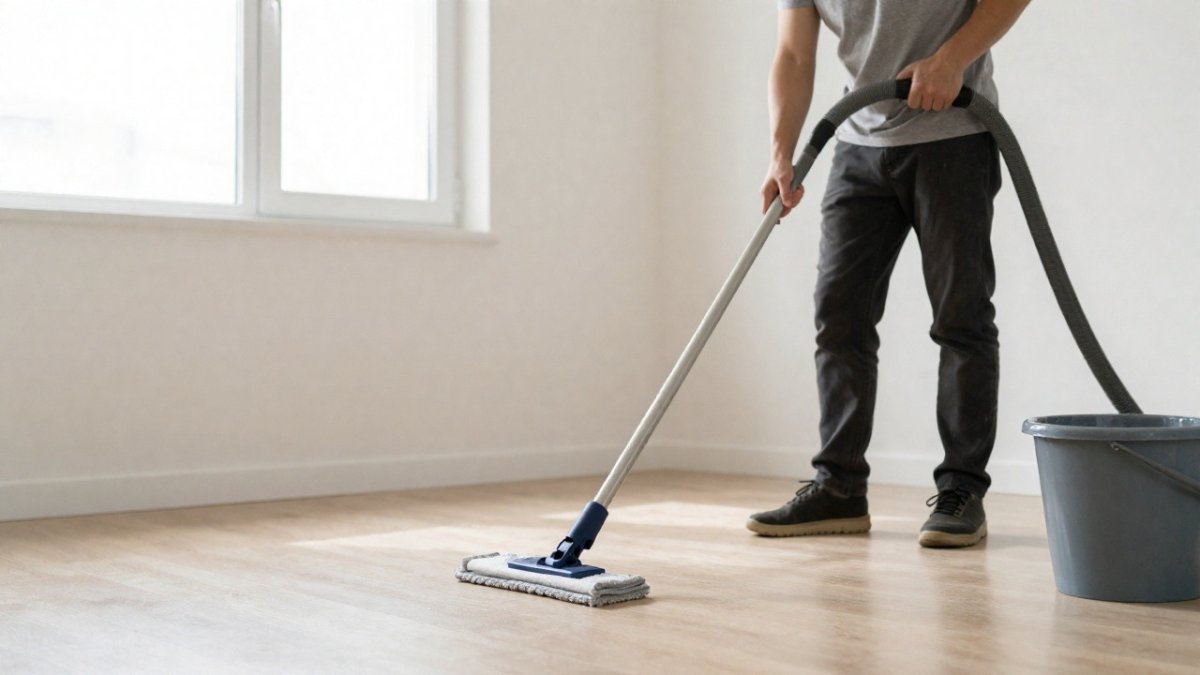
Hard floors need this full sequence.
Watch out: sweeping dry dust pushes it back into the air, where it lands on surfaces you already wiped.
The article gives a fixed order for cleaning fine dust off hard floors, and each step has one job.
| Step | What to do | Note |
|---|---|---|
| 1 | Mist the floor lightly with water | Holds dust down |
| 2 | Vacuum with a HEPA shop vacuum | Go slow so the filter catches fine particles |
| 3 | Work from the far corner toward the door | Keeps cleaned area behind you |
| 4 | Sweep only if needed with a damp broom | Never a dry one |
| 5 | Mop with warm water and a drop of dish soap | Rinse often |
| 6 | Repeat the mop pass once dry | Lifts the haze most people miss |
How to Clean Construction Dust from Furniture and Walls Post Construction
Walls and furniture collect dust on their tops, edges, and corners. Start high and work down. Dust falls, so cleaning low first only means doing it twice.
Use a damp microfiber cloth, not a regular duster, which just moves the dust. Wipe in straight lines and rinse the cloth in warm water often.
- Ceilings and corners: microfiber cloth on a pole, light pressure.
- Walls: wipe top down, one section at a time.
- Cabinets and counters: empty, wipe inside and out, let dry.
- Furniture: wipe tops, shelves, and edges; vacuum upholstery with a brush tool.
- Window sills and frames: wipe, rinse, wipe again.
- Air vents and registers: vacuum grates and swap the HVAC filter.
For a deeper walkthrough, see our post construction cleanup guide for spotless results. If you want to know what to tackle first, our guide to the top cleaning priorities after remodeling breaks down the order.
Fine dust hides in vents and blows back out whenever the air runs. Change the HVAC filter after cleanup, not before.
When Post Construction Cleaning Needs a Professional Team
Some jobs are bigger than a mop and a shop vacuum. Call a professional team when:
- The dust is still settling days after the work ended
- Vents, fixtures, or HVAC systems are coated inside
- The space is large, or the renovation involved heavy sanding
- You need the space move-in ready on a deadline
Our post renovation cleaning case study for homes shows what that looks like. When ready, book post construction cleaning in Palm Beach County.
Roenter Clean is locally owned, insured, and bonded, and we back our work with a 24-hour reclean guarantee.
Fine construction dust comes back if you clean it in the wrong order or with the wrong tools. Roenter Clean handles the whole job with HEPA equipment, trained crews, and customized plans for homes and businesses. Get a quote and let us get your space move-in ready.
Frequently Asked Questions
Should you vacuum or wipe construction dust first?
Vacuum first with a HEPA-filtered shop vacuum, then wipe with a damp microfiber cloth. Dry wiping or sweeping pushes fine construction dust back into the air, where it resettles on surfaces you already cleaned. Work from the top of each room down, and vacuum floors before mopping so you lift dust instead of turning it into mud. A second pass with a clean damp cloth catches the film that remains after the first wipe.
How long does construction dust stay in the air?
Fine dust and particles can hang in the air for hours after sanding or demolition stops, and HVAC systems can recirculate them through vents and registers for days. Change the HVAC filter after major work, run the system fan to pull air through filtration, and expect dust resettling on surfaces for several days. Repeat cleaning of high-touch surfaces and floors is normal after post-construction cleaning.
What is the best cleaner for construction dust?
Warm water with a few drops of dish soap handles most surfaces, and white vinegar diluted in water works on glass and window frames. Avoid dry dusters, which just move fine dust around. Use damp microfiber cloths so particles cling to the fabric, rinse them often, and switch to a fresh cloth when one gets loaded. For heavy renovation dust on cabinets and counters, a degreaser may be needed to cut the film left behind.