

A clean office is not just about appearances. Overflowing trash, dusty desks, marked glass, and neglected restrooms affect how employees feel at work and how clients view your business. The right office janitorial service options keep cleaning predictable, protect your workplace standards, and reduce the last-minute scramble before an important visit.
The best plan is rarely the biggest package on paper. It is the one that matches your office traffic, layout, business hours, and expectations for day-to-day presentation. Here is how to compare the most common options and choose a service level that makes practical sense.
Common Office Janitorial Service Options
Office cleaning can be arranged as recurring service, periodic detailed work, or a combination of both. Understanding what each option handles makes it easier to request an accurate quote and avoid paying for work your office does not need.
Daily or nightly janitorial service
Daily service is designed for busy workplaces where cleanliness needs to be maintained constantly. This is often the right fit for medical-adjacent offices, customer-facing businesses, high-traffic professional offices, shared workspaces, and locations with many employees using the same restrooms and break areas.
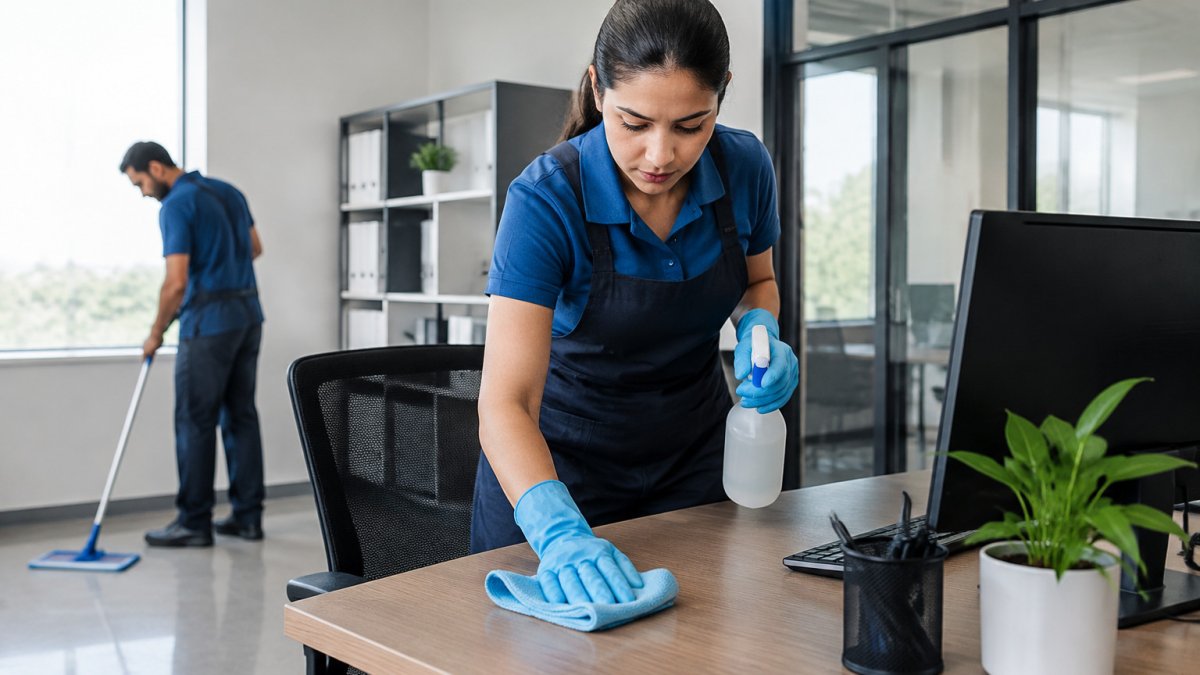
A daily or nightly visit typically includes trash removal, restroom cleaning and restocking, vacuuming or sweeping, mopping hard floors, wiping common touchpoints, and tidying kitchens or break rooms. Glass entry doors and reception areas may also receive regular attention because those are the first things visitors see.
This option provides the most consistent presentation, but it is not necessary for every workplace. A small office with a handful of employees may get the same results with fewer visits each week.
Two- or three-times-weekly cleaning
For many small and midsize offices, cleaning two or three times a week is the practical middle ground. It keeps common areas under control without the cost of daily service. This schedule works well when employees are regularly on-site but the office does not receive heavy public traffic every day.
Between visits, staff can handle simple tasks such as washing a personal mug or clearing food from a desk. The janitorial team manages the work that takes time, requires the right equipment, or is easy to overlook: floors, restrooms, trash, dust buildup, and shared surfaces.
A three-day schedule may be especially useful for offices that see their busiest traffic early in the week, host meetings often, or have a break room used throughout the day. A two-day schedule can work well for smaller teams with limited foot traffic.
Weekly office cleaning
Weekly cleaning is a dependable option for low-traffic offices, satellite locations, private professional suites, and businesses with hybrid staff. A weekly visit can cover the core work needed to keep the office presentable: cleaning restrooms, removing trash, vacuuming, mopping, dusting accessible surfaces, and cleaning the kitchen or break area.
The trade-off is simple. If the office becomes messy quickly, a weekly schedule can leave restrooms, floors, and trash bins looking neglected before the next service date. Before choosing this option, consider how many people are in the office on a typical day, whether clients visit, and how much food is prepared or eaten on-site.
Deep cleaning for offices
Deep cleaning is not a replacement for routine janitorial service. It is a detailed reset that addresses buildup in areas that are not fully cleaned during a standard visit. It may include detailed baseboard cleaning, interior glass, high and low dusting, spot cleaning walls, cleaning behind accessible furniture, more intensive floor care, and detailed attention to break rooms and restrooms.
Many offices schedule a deep clean before beginning a recurring plan. It gives the space a clean baseline, allowing routine service to focus on maintaining results rather than catching up on months of accumulated dirt. Deep cleaning also makes sense after a busy season, before a major client event, following an office move, or when management notices that routine upkeep is no longer enough.
One-time cleaning and special projects
Some situations call for a one-time visit rather than an ongoing contract. An office may need a thorough cleaning after construction work, before reopening a space, after a company event, or before an inspection. A vacant office may need cleaning before new tenants arrive or before a property showing.
Special projects should be clearly defined before service begins. For example, post-construction cleaning can involve fine dust, paint residue, stickers, and debris that require more labor than standard office cleaning. Window cleaning, carpet treatment, interior cabinet cleaning, and detailed floor work may also be quoted separately depending on the space and condition.
What Should Be Included in a Routine Plan?
A clear scope of work matters more than a vague promise to “clean the office.” Reliable janitorial service should spell out what happens at every visit and what is reserved for periodic or add-on cleaning.
For most offices, recurring service should address restrooms, trash and liners, floors, break rooms, reception areas, and common touchpoints. Desks are often cleaned around, rather than cleared and organized, unless employees remove personal items and paperwork beforehand. That protects confidential documents and makes it clear where responsibility starts and ends.
Restroom service deserves special attention. A properly maintained restroom involves more than emptying the trash. Fixtures, sinks, counters, mirrors, floors, dispensers, and high-touch surfaces all need regular cleaning. Supply restocking should also be discussed in advance. Some businesses provide their own paper goods and soap, while others prefer the cleaning provider to manage replenishment.
Break rooms can be another source of confusion. Standard cleaning often includes wiping counters, cleaning sinks, removing trash, and mopping floors. Cleaning inside a refrigerator, scrubbing an oven, or removing old food may require a deeper service or clear approval from the office manager.
How to Choose the Right Frequency
The right cleaning frequency depends on how your office is used, not just its square footage. A compact office with 25 employees can require more frequent care than a larger office occupied by five people twice a week.
Start by looking at four practical factors:
- Daily headcount and visitor traffic
- Number of restrooms, kitchens, and shared work areas
- Floor types and how quickly they show dirt or debris
- Business hours and the best time for cleaners to work
Client-facing businesses generally benefit from more frequent cleaning because reception areas, entry glass, and restrooms directly influence first impressions. Businesses with warehouse dust, landscaping debris, or frequent deliveries may also need extra floor care near entrances and work areas.
Timing matters, too. After-hours cleaning prevents disruption and allows floors to dry before staff return. Day porter service can be useful for large facilities or busy locations that need restrooms checked, spills addressed, and common areas maintained during operating hours. However, it is usually more than a smaller office needs.
Questions to Ask Before Hiring a Janitorial Team
A good quote should be based on the actual conditions of your office. Be prepared to share the approximate square footage, number of employees, restroom count, preferred service frequency, and any areas that need special attention. An on-site assessment is especially helpful for larger offices, unusual layouts, or spaces that need an initial deep clean.
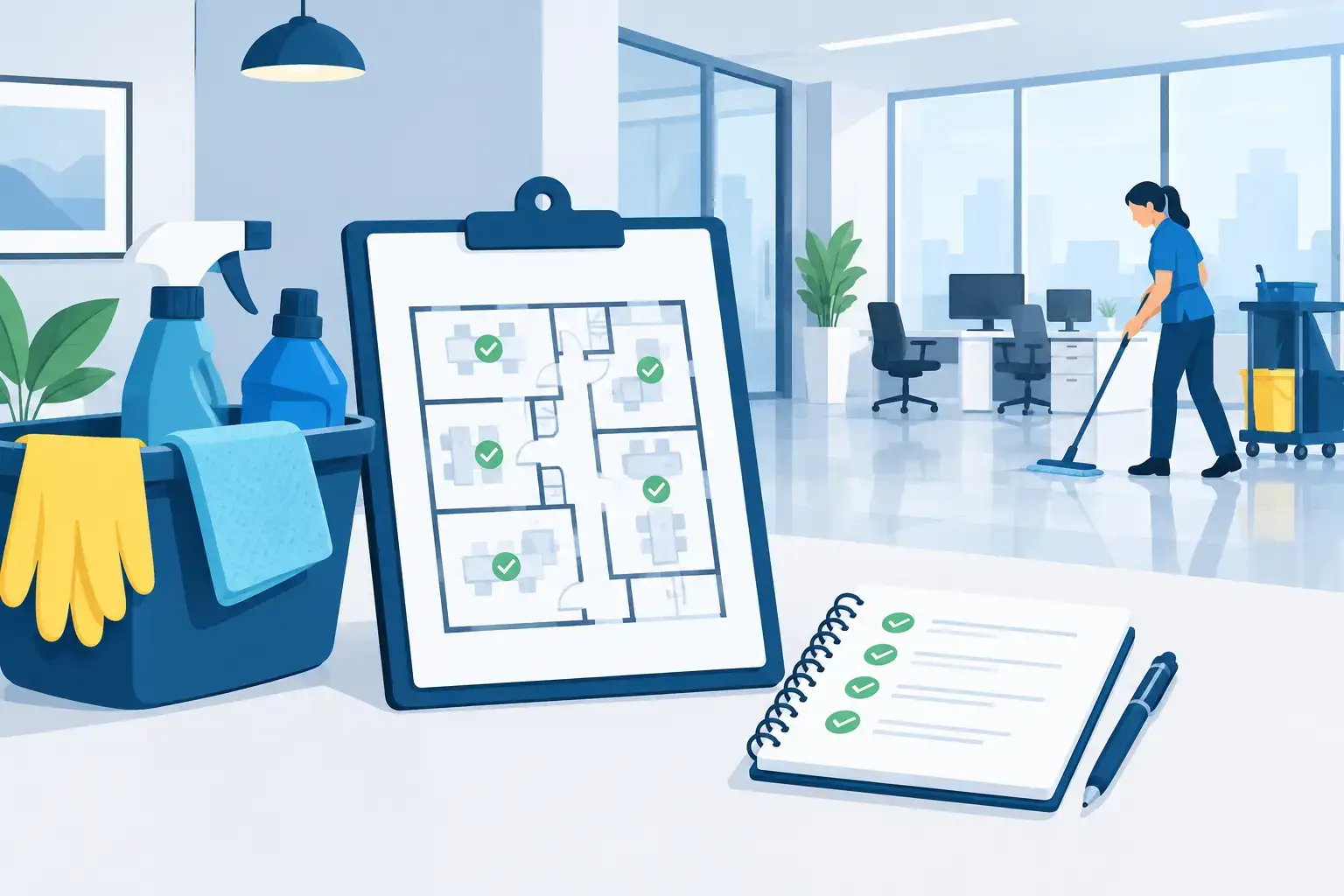
Ask how the cleaning checklist is managed and how quality is reviewed. Consistency is one of the biggest reasons businesses hire professional cleaners, so there should be a process for verifying that restrooms, floors, trash, and detail work are completed as expected.
It is also reasonable to ask about communication. If an employee spills coffee on carpet before a meeting or your office needs an extra visit after an event, you need a provider that responds quickly and gives clear answers. Flexible scheduling is valuable, but it should not come at the expense of dependable recurring service.
Finally, clarify pricing before work begins. Straightforward pricing identifies the visit frequency, regular tasks, special requests, and any work that falls outside the normal scope. This helps office managers compare service options accurately instead of choosing a low starting price that leaves out essential work.
Build a Plan That Supports Your Workplace
The strongest office cleaning plan is built around visible needs and realistic use of the space. A small suite may need weekly service plus an occasional deep clean. A busy office in West Palm Beach or Boca Raton may need three nightly visits each week to keep restrooms, reception, and shared spaces consistently professional.
Roenter Clean can help businesses create a practical schedule based on office traffic, priorities, and the condition of the space. Start with the areas employees and visitors use most, set a frequency that prevents buildup, and adjust as your team or business needs change. A dependable cleaning plan gives your staff one less operational detail to manage and gives every visitor a better reason to feel confident in your business.