

A rushed office employee misses the fingerprints on the lobby glass. A rental turnover runs late because laundry is still drying. A homeowner keeps moving deep cleaning to next weekend. These are the everyday moments when professional cleaners versus in-house staff becomes more than a budget question. It becomes a question of who is accountable for the final result.
For homes, offices, short-term rentals, and commercial properties, both options can work. The better choice depends on how often you need service, how specialized the work is, how much management time you can spare, and what a missed cleaning would cost you.
Professional Cleaners Versus In-House Staff: The Core Difference
In-house staff are employees or dedicated workers assigned directly to your property or business. You set their schedules, provide direction, and typically handle payroll, training, supplies, and coverage when they are unavailable. This setup can give a large operation close day-to-day control.
Professional cleaning companies provide a scheduled service team rather than a single employee. The company is responsible for assigning cleaners, coordinating service, bringing appropriate equipment when included in the scope, and maintaining a consistent cleaning process. For most households and small to midsize businesses, that removes a significant operational burden.
The choice is not simply about who can mop a floor or empty a trash bin. It is about whether cleaning is a task you want to manage internally or a service you want completed to an agreed standard.
Compare the Full Cost, Not Just the Hourly Rate
An in-house cleaner’s hourly wage is only part of the cost. Depending on the arrangement, you may also need to account for payroll taxes, workers’ compensation, benefits, paid time off, recruiting time, background checks, uniforms, cleaning chemicals, vacuums, replacement equipment, and training. If the employee calls out, you may need to find coverage on short notice or accept a missed service.
A professional cleaning quote can look higher next to an hourly wage at first glance. However, it generally combines labor, supervision, service coordination, and a defined scope of work into one predictable cost. You are paying for completed service rather than building and managing a cleaning department.
For a small office in West Palm Beach or a homeowner with recurring needs, this distinction matters. A straightforward recurring plan may be easier to budget than the variable costs of staffing, supply purchasing, and last-minute absences. For a large facility that needs cleaning personnel on-site throughout every business day, in-house staff may still be financially practical. Scale changes the math.
Consider the Cost of Missed Details
The most expensive part of cleaning is sometimes not the cleaning bill. It is the impact of work that was skipped or rushed.
For an office, dusty workstations, full trash bins, and neglected restrooms affect employee comfort and client impressions. For an Airbnb, missed linens, hair in the bathroom, or streaked mirrors can lead to poor reviews. For a home, inconsistent cleaning often means dirt builds up until a time-consuming deep clean is necessary.
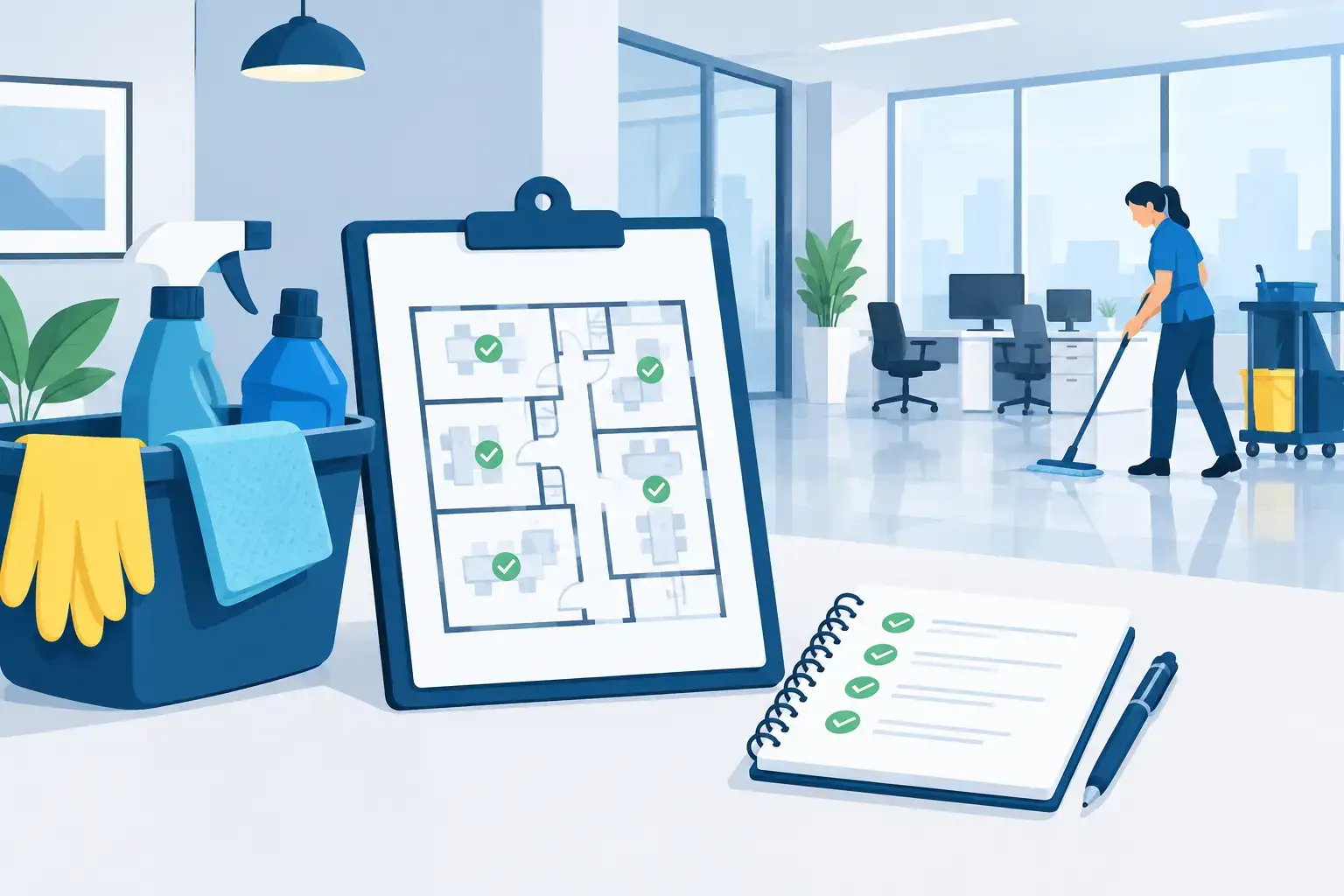
Professional teams are usually structured around checklists and quality checks. That does not mean every provider delivers the same result, but it does mean you can set clear expectations for areas such as kitchens, bathrooms, floors, high-touch surfaces, windows, and guest-ready finishing details.
Consistency Depends on Process and Coverage
A dependable in-house cleaner can learn your property exceptionally well. They know where supplies belong, which rooms receive the most use, and what details matter to your family, tenants, or employees. If you have enough cleaning volume to keep that person consistently scheduled, familiarity can be a real advantage.
The drawback is single-person dependency. Illness, vacation, turnover, or scheduling conflicts can interrupt your routine. Replacing and training someone takes time, especially when the property has specialized needs.
Professional cleaners can offer more coverage because a company has a team structure. If one team member is unavailable, the provider may be able to adjust staffing rather than canceling outright. Ask any cleaning company how it handles schedule changes, quality concerns, and repeat service instructions. A clear answer is a strong sign that the company has an operating process, not just availability.
For recurring service, document what matters most. Maybe your office needs conference room glass checked before Monday meetings. Maybe your rental requires photos after each turnover. Maybe your home has delicate surfaces, pet areas, or rooms that should not be entered. The provider or employee who follows those instructions consistently is the right fit.
Specialized Jobs Often Favor Professional Teams
Routine maintenance cleaning is one thing. Post-construction dust, move-out cleaning, deep bathroom buildup, short-term rental turnovers, and streak-free window cleaning are another.
These jobs may require more labor, different tools, extra time, and a methodical sequence. Post-construction cleaning, for example, often involves fine dust settling across floors, ledges, fixtures, vents, and cabinets. An employee who handles basic upkeep may not have the equipment or experience to complete that work efficiently.
Professional cleaners are often the more practical choice when the job has a clear deadline or a higher-than-normal standard. A contractor needs a newly renovated property ready for handoff. A property manager needs a unit ready before the next tenant arrives. A host needs a turnover completed between checkout and check-in. In each case, the result needs to be visible, not merely adequate.
This is also where service scope matters. Before booking, confirm which areas are included, whether interior windows or appliances are part of the job, who supplies materials, and whether the team can accommodate special instructions. Clear scope prevents disappointment on both sides.
Management Time Is a Real Expense
Hiring internally means taking responsibility for more than the cleaning itself. Someone needs to interview candidates, verify reliability, train them, monitor the work, purchase supplies, approve time, respond to questions, and manage performance. For a busy office manager or property owner, those tasks can quietly consume hours each month.
Outsourcing shifts much of that administration to the cleaning company. You still need to communicate access instructions and priorities, but you are not responsible for daily supervision or employment administration. That can be especially valuable for owners managing multiple rentals or business operators focused on customers and staff.
Responsiveness matters here. If an event is scheduled, a guest checks out early, or a renovation finishes ahead of plan, you need a provider that can communicate clearly about scheduling and availability. No cleaning option can promise unlimited last-minute service, but a responsive local team can help you plan around real changes.
When In-House Staff Is the Better Choice
In-house staffing makes sense when cleaning is a constant, full-time operational need. Hotels, medical facilities, large campuses, and high-traffic venues may need someone available throughout the day for immediate spills, restroom checks, restocking, and emergency response. In those settings, direct control and constant presence can outweigh the added management work.
It can also work well when your organization already has human resources, purchasing systems, and supervisors in place. If those systems exist, the added effort of employing cleaning staff may be manageable.
Even then, many larger operations use a hybrid approach. Internal staff handle daily touch-ups and urgent needs, while a professional cleaning company manages periodic deep cleaning, floors, windows, construction cleanup, or after-hours service.
When Professional Cleaners Are the Better Choice
Professional cleaning is often the stronger option when your need is recurring but not full-time, when the work requires specialized attention, or when you want a clean space without managing employees. Homeowners who want dependable weekly or biweekly cleaning, offices that need after-hours service, rental hosts with tight turnover windows, and contractors preparing a final handoff all fit this model.
The key is choosing a provider based on reliability rather than price alone. Ask how the company defines the service, how it handles access, whether it offers recurring and one-time options, and what happens if an area needs attention after the appointment. Reviews can also reveal whether customers consistently mention communication, punctuality, and detailed results.
Roenter Clean works with Palm Beach County clients who need that practical balance: flexible scheduling, clear service expectations, and cleaning that leaves a home, workplace, or rental ready to use.
The best decision is the one that protects your time and your standards. If cleaning requires constant on-site coverage, build the internal team to support it. If you want a spotless property without payroll, supply runs, and coverage concerns, choose a professional service plan that matches how your space is actually used.